Configured reservation fields
Fields matched to your fleet type, not a generic contact form.
A rental booking page works when it collects pickup date, return date, location and vehicle class before a single email is exchanged, so the enquiry that reaches your team is ready to be answered rather than the start of a back and forth.
What it costs
A generic contact form asks for a name, an email and a message, leaving every real detail for a follow up. The reservation page instead asks for pickup date, return date, pickup location, vehicle class and any add on drivers or equipment, so whoever answers can reply with real availability and a rate range on the first message.
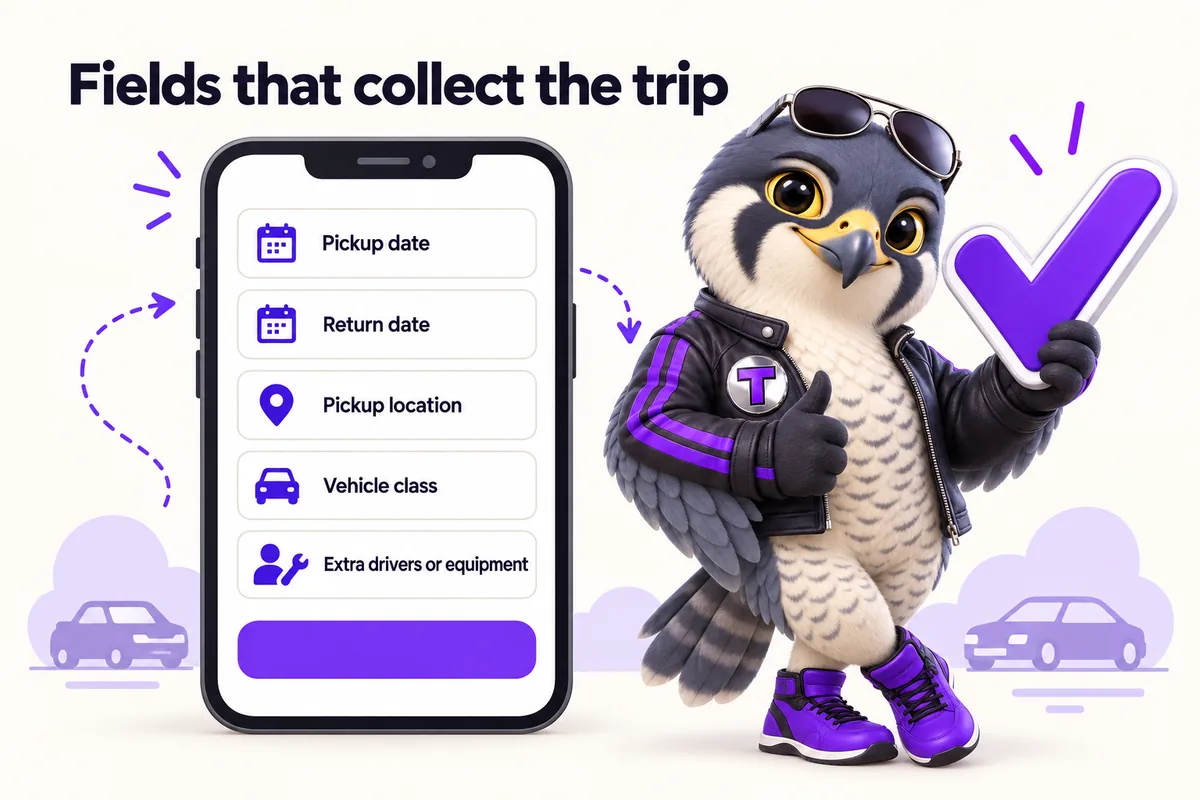
A campervan reservation needs trip length and equipment add ons; a wedding hire needs event date and occasion type; a corporate transfer needs pickup and drop off points and timing. The reservation page is configured around your specific fleet type rather than a one size fits all form.
Every completed reservation request lands in your CRM, inbox or booking system by direct API, Zapier or Make. Nothing sits inside a form plugin dashboard waiting to be checked separately from the tools your team already uses every day.
Fields matched to your fleet type, not a generic contact form.
Completed requests routed to your CRM, inbox or booking tool.
Pickup and drop off fields configured for your actual locations.
A class picker that reflects your real fleet, not a generic list.
The details your team needs are required, so nothing arrives incomplete.
Fleets whose enquiries arrive without the information needed to answer them. If your first reply to most enquiries is a list of questions, the problem is the form rather than the renter.
Four things people reasonably expect and do not get, written here rather than discovered later.
The monthly fee is the same whatever your fleet looks like. These are the things that decide how much of the first two weeks goes where.
Self drive against driver led, single rental against group, wedding against corporate. Each genuine fork is a different set of questions.
Direct API into a mainstream CRM is quick. A bespoke internal system usually needs a step in between.
There is a real trade between asking enough to reply properly and asking so much that people give up. Getting that balance right is the work.
Different enquiry types reaching different people, with different urgency, is worth setting up and takes a conversation to get right.
The flow is designed early, because every other page points at it. Fields are agreed on the onboarding call, the paths for each service type are built, the CRM delivery is wired and tested with real submissions, and it is live with the rest of the site in seven to fifteen days depending on plan.
Live in 7 to 15 days from the onboarding call depending on the plan, then 5 change requests a month completed within 2 to 5 working days.
Named reviews from rental businesses we have built for, each about the part of the site that changed.
The part I rate most highly is the form, not the visuals. The form gathers travel dates, passenger count and intended route at the start, exactly the details our follow-up messages always requested. Most mornings I can prepare for the callback from the first message alone.
Inquiry form and response workflow for touring vehicle requests
The touring vehicle requests form used to punish anyone who missed one answer. The messages name the problem, and correcting a field no longer clears the rest. It now helps people finish instead of catching them out.
Form usability and error handling for touring vehicle requests
The 'did you receive it?' calls about touring vehicle requests were a daily occurrence here. The acknowledgment explains the next step clearly and tells people how to reach us if something is wrong. It sounds minor until you add up the reassurance calls it has replaced.
Submission acknowledgment and follow-up for touring vehicle requests
Real projects for rental businesses, from the starting point to what changed. Clients are described by type and region, not named.
Stuart SatterfieldFleet administrator, pet-friendly motorhome rental, Savannah, GeorgiaRead the case studyOne message about touring vehicle requests now carries what three used to. The difference shows up every morning.
Nobody buys a website in a vacuum. You are weighing this against the builder you already pay for, the person who made the last one, or leaving things as they are. We have written all ten comparisons honestly, including the cases where the other option is the better choice for a rental business.
The page collects a reservation request rather than running a live availability calendar. Your team confirms availability directly, since that keeps the fleet's real schedule in your hands rather than a third party calendar system.
Yes, fields can be tailored per class, such as an equipment add on list for campervans or a delivery request for luxury vehicles.
No, the page collects the request itself. Payment and deposit handling stay with whatever system your business already uses for that.
Yes, the form can state and require acknowledgment of requirements you set, such as a minimum age or license class, in your own wording.
It can reduce the raw count and it usually raises the number worth replying to. A generic form produces messages you cannot answer without a phone call. Asking for dates, location and class up front means the first reply can carry real availability, which is where bookings are actually won.
No, and that is deliberate. Availability in a specialist fleet depends on what came back damaged, what is booked provisionally and what your team is holding. The flow collects the trip and hands it over so a person makes that call.
Into whichever CRM or inbox you already use, by direct API, Zapier or Make. Nothing sits in a form plugin waiting to be checked, and your team does not learn a second system.
A maths based human check rather than a third party widget, so there is no extra script slowing the page down and no cookie consent implication. It stops automated submissions without making a real renter solve a puzzle.
A live walk-through of the site you would get, in about 30 minutes. Plans from $127 a month, the $697 build fee invoiced only after launch, domain and hosting included.
Book a demoOr email and a person replies within one working day.
RentalWebStudio uses the cookies below. Necessary cookies keep the site working and cannot be turned off.
Saved on this device only. Press Esc to close.