Fleet type starting points
Layout patterns suited to luxury, campervan, van and event hire.
A template here is a proven starting point for a fleet class page, a location page and a reservation flow, and every one is rebuilt around your own brand, fleet and rate structure before it goes live rather than sold as a shared theme.
What it costs
Owners who want to see the shape of the thing before they commit. If you are weighing a template based build against a managed one, this page explains what a starting point does and does not decide.
Unlike a marketplace theme installed on thousands of sites, a template here is a proven layout pattern that our team rebuilds specifically for your fleet: your photography, your vehicle classes, your locations and your rates. No two client sites end up looking identical, because the template is a starting structure rather than the finished product.
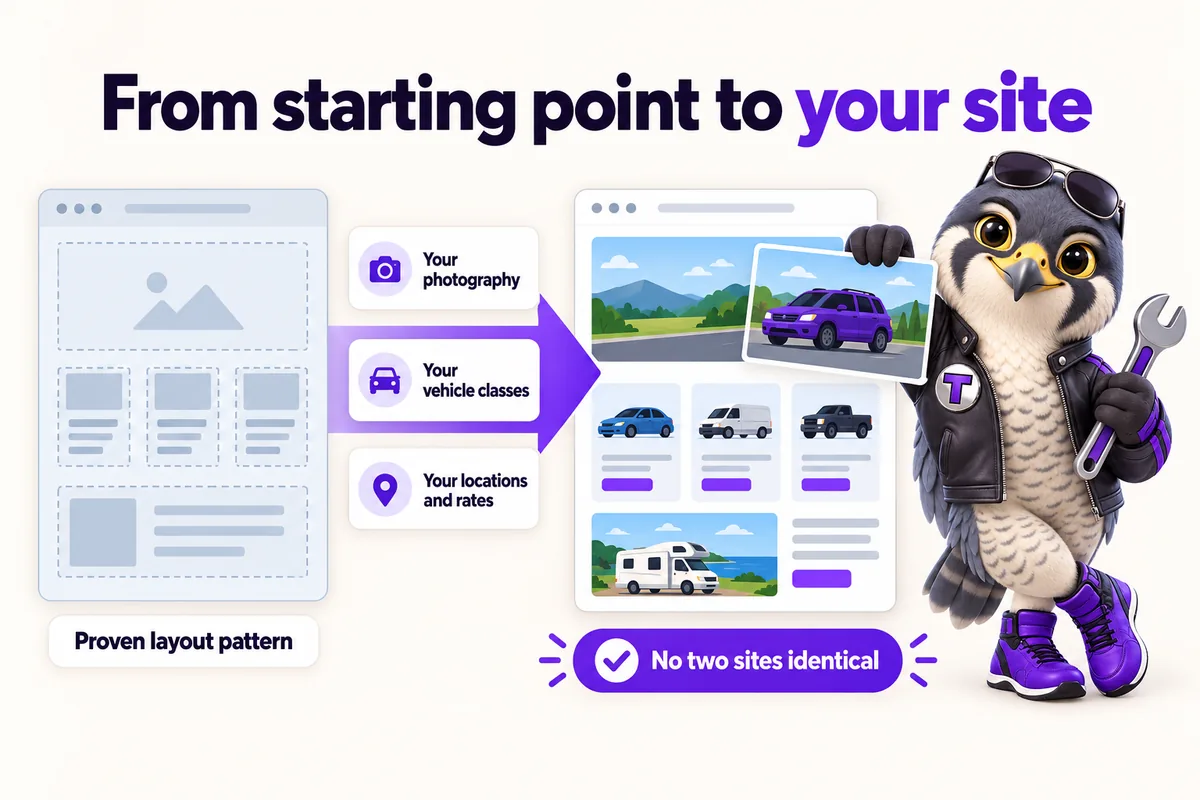
A luxury fleet, a campervan operator and a wedding car business all start from a different layout emphasis, since a luxury showroom feel and a practical trip planning feel are different designs. We pick the closest starting point to your fleet type and adjust it, rather than forcing every fleet into one generic layout.
Once a starting point is chosen, your onboarding answers, brand assets and fleet details are used to build out the real site. What launches is a complete, custom site built on a proven structure, not a placeholder theme with your logo dropped in.
Layout patterns suited to luxury, campervan, van and event hire.
Colors, type, photography and copy rebuilt around your fleet.
The same configured reservation flow built into every starting point.
A ready pattern for adding pickup and drop off locations.
A proven starting structure speeds up the path to a live site.
Four things people reasonably expect and do not get, written here rather than discovered later.
A starting point shortens the first week rather than the whole build. The onboarding call picks the closest fit, your fleet structure and photography replace the placeholders, and the design diverges from there as the change requests come in. Launch is still seven to fifteen days depending on plan.
Live in 7 to 15 days from the onboarding call depending on the plan, then 5 change requests a month completed within 2 to 5 working days.
The monthly fee is the same whatever your fleet looks like. These are the things that decide how much of the first two weeks goes where.
Most fleets end up somewhere quite different from where they started, which is fine. The starting point saves a week, not a budget line.
The same starting point carries a four class fleet and a twelve class fleet differently, and the second needs more structure work.
A fleet with a logo, colours and a photography style moves faster than one deciding those during the build.
Placeholder galleries are marked clearly at launch and replaced as your photography arrives, at no extra cost, and the sooner it arrives the sooner the pages do their job.
Named reviews from rental businesses we have built for, each about the part of the site that changed.
The old touring vehicle requests PDF made sense on a printer and nowhere else. The content is the same material, reorganized into headed sections that work on any screen. Callers have stopped apologizing for not being able to read it.
Structured reference pages for touring vehicle requests
My first check was simple: open the touring vehicle requests page on a phone and try to get in touch. Key information comes first and the contact option is clearly labeled. Staff can now text a single link mid-call instead of narrating the menu.
Mobile navigation and page layout for touring vehicle requests
I was skeptical that a guide would change much for touring vehicle requests. I was wrong. Visitors arrive knowing what the first discussion covers and what they should think about beforehand. We include it in our first response as standard.
Preparation guide and inquiry support for touring vehicle requests
Nobody buys a website in a vacuum. You are weighing this against the builder you already pay for, the person who made the last one, or leaving things as they are. We have written all ten comparisons honestly, including the cases where the other option is the better choice for a rental business.
No. The starting point is a layout pattern, not a finished design. Your photography, brand colors, copy and fleet structure make the finished site your own.
The templates page shows examples as they are published. Until then, the fastest way to see a build for your fleet type is a live demo, walked through on your screen.
No, choosing a starting point is part of the standard build process included in every plan, not an add on.
Yes, the onboarding call is exactly where we adjust the chosen starting point to fit your fleet before the build begins.
You get a starting point chosen with you on the onboarding call, based on your sub-niche and your fleet. It is a head start on week one rather than a menu, because the decisions that matter on a rental site are structural rather than cosmetic.
No. Two fleets starting from the same point diverge immediately, because the photography, the classes, the locations and the terms are different, and because every change request moves it further. The structure repeats; the site does not.
No. What we sell is the built and managed site. A template on its own leaves you with the part that was never the hard bit, and none of the part that was.
Then we start from the structure rather than a starting point. That happens with unusual fleets, for example a mixed fleet running powersports and campervans out of the same counters, and it does not change the price or the timeline.
A live walk-through of the site you would get, in about 30 minutes. Plans from $127 a month, the $697 build fee invoiced only after launch, domain and hosting included.
Book a demoOr email and a person replies within one working day.
RentalWebStudio uses the cookies below. Necessary cookies keep the site working and cannot be turned off.
Saved on this device only. Press Esc to close.